


How the GMC Sierra EV and Used Ford F-150 Lightning Meet Different Truck Needs
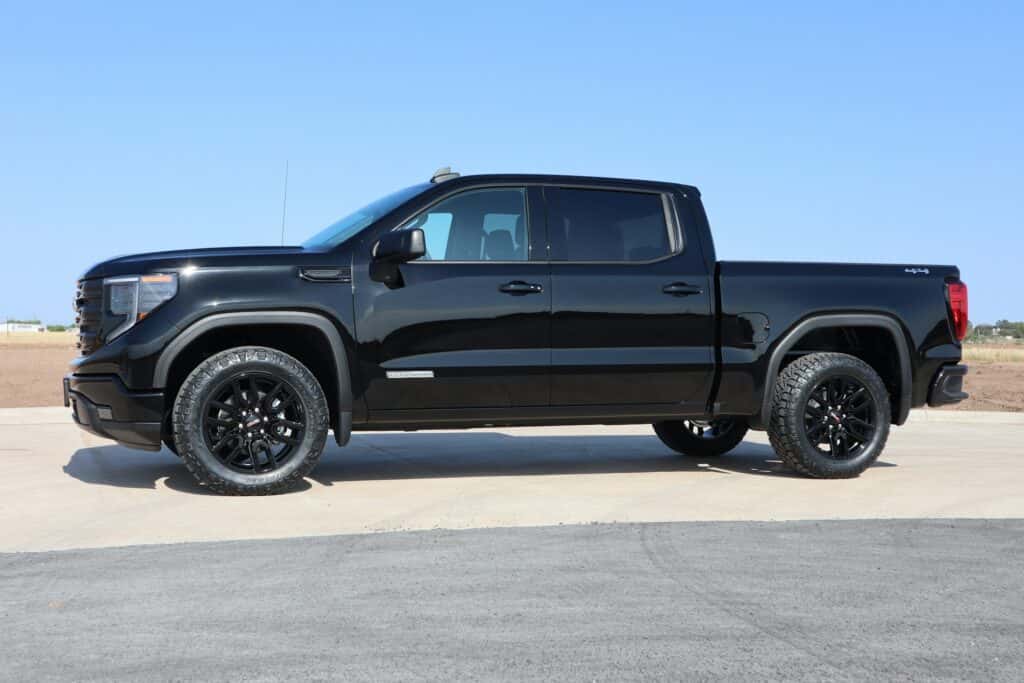
2026 GMC Sierra EV vs. 2025 Ford F-150 Lightning: Which Fits How You Use a Truck?
If you’re comparing a 2026 GMC Sierra EV with a used 2025 Ford F-150 Lightning, start with how you charge, tow, and carry gear. Ford ended production of this battery-electric Lightning generation, so check the exact used truck’s battery, equipment, and remaining warranty. The right fit depends on the exact trim, battery pack, charging access, towing routine, and how you use the truck during a normal week.
At Freeman Buick GMC, we encourage shoppers in Grapevine, the DFW Airport area, Dallas, Fort Worth, and Irving to compare electric trucks by real use, not just by a single headline figure. A daily route, home-charging setup, trailer weight, bed needs, and equipment list can all change which truck makes more sense.
The figures below come from GMC and Ford materials for these model years, and each applies only to the trim, battery, and equipment named with it. GMC labels some ranges EPA-estimated and others GM-estimated, while Ford’s are EPA-estimated, so the labels matter.
Which Truck Fits Daily Driving And Home Charging?
On the Sierra EV, GMC lists EPA-estimated range of up to 283 miles with the Standard Range battery (Elevation and Denali) and up to 410 miles with the Extended Range battery (Elevation and Denali). The longest figure, up to 478 miles, is GM-estimated and applies only to the AT4 and Denali with the available Max Range battery.
Ford lists EPA-estimated range by battery for the 2025 Lightning: up to 240 miles with the 98-kWh standard-range battery (Pro and XLT), up to 300 miles with the 123-kWh extended-range battery (Flash), and up to 320 miles with the 131-kWh extended-range battery on Lariat or 300 miles on Platinum. For an EPA-to-EPA comparison, the closest pairing is the Sierra EV Extended Range at 410 miles and the Lightning Lariat at 320 miles.
For home charging, Ford lists Level 2 estimates for a 15% to 100% charge of about 10 hours with the 98-kWh battery, 12 hours with the 123-kWh battery, and 13 hours with the 131-kWh battery. Those times assume a 48A Ford Connected Charge Station or 80A Ford Charge Station Pro, both available Ford accessories. With the 30A/240V Ford Mobile Charger, Ford lists about 15, 18, and 20 hours for the same three batteries. For the Sierra EV, ask our team for the AC charging rate and estimated Level 2 charging time for the exact battery pack.
On the exact truck, check:
- The battery. Standard, Extended, or Max Range on the Sierra EV, or 98, 123, or 131 kWh on the Lightning, because it sets range, tow rating, and payload.
- Battery condition on a used Lightning. Ford says actual range varies with battery age and state of health.
- Warranty. Ford lists 8 years or 100,000 miles on the Lightning’s high-voltage battery (retaining at least 70 percent of original capacity over that period) and 3 years or 36,000 miles bumper-to-bumper. GMC lists 8 years or 100,000 miles of battery and electric components coverage on the Sierra EV. Ask for the used Lightning’s warranty start date and mileage to see what remains.
- Which home charger, if any, comes with the truck.
Which Truck Fits Longer Trips With A Trailer?
GMC lists Sierra EV maximum trailering of up to 12,500 pounds on Elevation and Denali with the Extended Range battery, and up to 12,300 pounds on the AT4 with the Extended Range battery. Those figures are GM-estimated, and the Elevation and Denali number assumes standard suspension. GMC lists up to 8,500 pounds with the Standard Range battery and up to 10,200 pounds with the Max Range battery.
Ford lists up to 10,000 pounds on the Lightning Flash and Lariat when properly equipped with the available Max Trailer Tow Package, and up to 7,700 pounds on the XLT with that package. Without the package, Ford lists 5,000 pounds with the 98-kWh battery and 7,700 pounds with the larger batteries. Platinum is rated lower than Flash and Lariat, so check its exact rating.
Payload matters as much as the tow rating, because tongue weight counts against it. For the 2026 Sierra EV, GMC lists maximum payload of up to 2,250 pounds for Elevation and Denali Standard Range, 1,700 pounds for Elevation Extended Range, and 1,950 pounds for AT4 and Denali Extended Range. Check the payload label on the specific truck. Ford lists maximum payload of up to 2,329 pounds on the Pro with the standard-range battery, 2,246 pounds with the 123-kWh battery, and 1,879 pounds with the 131-kWh battery, when properly equipped. In both lineups, the battery with the most range carries the lower payload rating.
Published range is for a full charge and varies with loading, so neither figure is a towing range. Plan your charging stops around the loaded trailer.
The two makers also describe fast charging under different conditions. Ford lists a 15% to 80% charge in about 32 minutes with the 98-kWh battery and about 38 minutes with the 123-kWh or 131-kWh battery, using DC fast charging of 150 kW or more. At 150 kW, Ford lists about 62 miles added in 10 minutes with the standard-range battery and about 65 miles with the extended-range batteries. GMC lists up to 100 miles of range in approximately 10 minutes on a Sierra EV with available 800-volt DC fast charging at up to 350 kW, such as the AT4. The available system on Elevation is rated up to 300 kW, and GMC notes that charge times vary with starting state of charge, battery condition, charger output, vehicle settings, and outside temperature. Because Ford’s figures assume a 150 kW charger and a 15% starting charge while GMC’s assumes a charger that can deliver up to 350 kW, they should not be treated as an apples-to-apples result.
Hands-free highway driving differs by trim. GMC lists Super Cruise as standard on Sierra EV AT4 and Denali and available on Elevation, and it requires an active Super Cruise plan or trial. For the 2025 Lightning, Ford lists a 90-day BlueCruise trial on Flash, Lariat, and Platinum, a 1-year plan available on Flash and Lariat, and the 1-year plan standard on Platinum. Both systems work only on compatible roads.
On the exact truck, check:
- The tow rating for that battery and equipment, including the Max Trailer Tow Package on a Lightning.
- The payload label on the door jamb, then add tongue weight, passengers, cargo, and hitch hardware.
- Whether the Sierra EV has 800-volt DC fast charging, which GMC lists as available.
- Whether any BlueCruise plan is still active on a used Lightning.
Which Truck Fits Bulky Gear And Tool Storage?
The Sierra EV puts its flexibility in the bed, and the Lightning puts more space in its front trunk.
GMC lists 57.5 cubic feet of maximum cargo box volume on the Sierra EV. The available MultiPro Midgate opens the bed into the cab for nearly 11 feet of cargo length (10 feet 10 inches with the MultiPro Tailgate lowered, load stop in place, rear seats folded, and back glass removed). The six-function MultiPro Tailgate is standard on Elevation and Denali. Ford’s 5.5-foot bed has 52.8 cubic feet of cargo box volume and 67.1 inches of length at the floor, and Ford does not list a midgate on the Lightning.
For tools, the Sierra EV’s eTrunk holds 11.0 cubic feet and has a power-operated hood. The Lightning’s front trunk is larger at 14.1 cubic feet (400 liters) and has four 120-volt outlets with Pro Power Onboard. Ford lists 2.4 kW Pro Power Onboard as standard on Pro through Lariat, and 9.6 kW as optional on those trims and standard on Platinum. GMC lists 7.2 kW Energy Transfer as available on Elevation and 10.2 kW Energy Transfer Pro as available on AT4.
On the exact truck, check:
- Whether the Sierra EV has the Midgate, which is listed as available.
- Which Pro Power Onboard level the Lightning has, and whether the outlets you plan to use are present and working.
- Fit. Bring your longest item and your tool cases.
What Else Should You Plan For?
Ownership planning matters too. If you are building a budget around an electric truck purchase, our online finance application can help you prepare before selecting a specific configuration. Long-term service support also matters, and Freeman Buick GMC offers a service center for ongoing vehicle care.
How Can You Compare These Electric Trucks In Grapevine?
A useful EV truck comparison starts with your actual week. Think about commuting distance, access to home charging, regular towing, parking space, cargo length, and whether the truck spends more time on pavement or on mixed-use routes.
For trim-by-trim feature tables, see our side-by-side Sierra EV and Lightning trim comparison, which compares the Sierra EV Elevation and Denali with the Lightning XLT and Platinum.
Freeman Buick GMC is located at 501 West State Hwy 114, Grapevine, TX 76051. Call our Sales team at (877) 267-1495 to discuss Sierra EV configurations. As a family owned and operated dealership serving the Metroplex since 1952, we help drivers compare truck configurations in practical terms.
Compare Electric Truck Features With Confidence
At Freeman Buick GMC, our team can help you narrow the details that matter for your daily driving, work needs, and charging routine. Review our new Sierra EV inventory for a closer look at their distinct capabilities. Ready to discuss Sierra EV configurations or available features? Contact Freeman Buick GMC for assistance.
FAQs
Is The Sierra EV Or F-150 Lightning Better For Longer Driving Between Charges?
For published range, the Sierra EV reaches farther. Comparing EPA-estimated figures, GMC lists up to 410 miles for Elevation and Denali with the Extended Range battery, while Ford lists up to 320 miles for the 2025 Lightning Lariat. GMC’s longest figure, up to 478 miles on AT4 and Denali with the Max Range battery, is GM-estimated. A used Lightning’s real-world range also depends on its battery’s age and condition.
Can Either Truck Handle Towing For Work Or Recreation?
Yes, but the exact battery, trim, and equipment matter. GMC lists Sierra EV max trailering of up to 12,500 pounds (GM-estimated) on Elevation and Denali with the Extended Range battery. Ford lists up to 10,000 pounds on the 2025 Lightning Flash and Lariat with the Max Trailer Tow Package. Check the payload label and your loaded trailer weight on the exact truck.
What Should I Compare Beyond Range?
Look at the battery-specific towing figure, payload label, charging access, front or bed storage needs, cabin tech, available driver-assistance features, and how often you tow. A truck that looks stronger in one headline category may not fit your routine as well once the full picture is considered.
Does Home Charging Change The Decision?
Yes. A dependable home-charging setup can make either truck easier to live with. If public fast charging will be part of your routine, compare the charging speed claims, your likely routes, and the battery pack on the exact truck you are considering.
What Should I Check On A Used 2025 F-150 Lightning?
Confirm the battery size (98, 123, or 131 kWh), the equipment that sets its tow rating and payload, such as the Max Trailer Tow Package, and whether any BlueCruise plan is still active. Ask for the warranty start date and mileage. Ford lists 8 years or 100,000 miles on the high-voltage battery and 3 years or 36,000 miles bumper-to-bumper.

0 comment(s) so far on How the GMC Sierra EV and Used Ford F-150 Lightning Meet Different Truck Needs